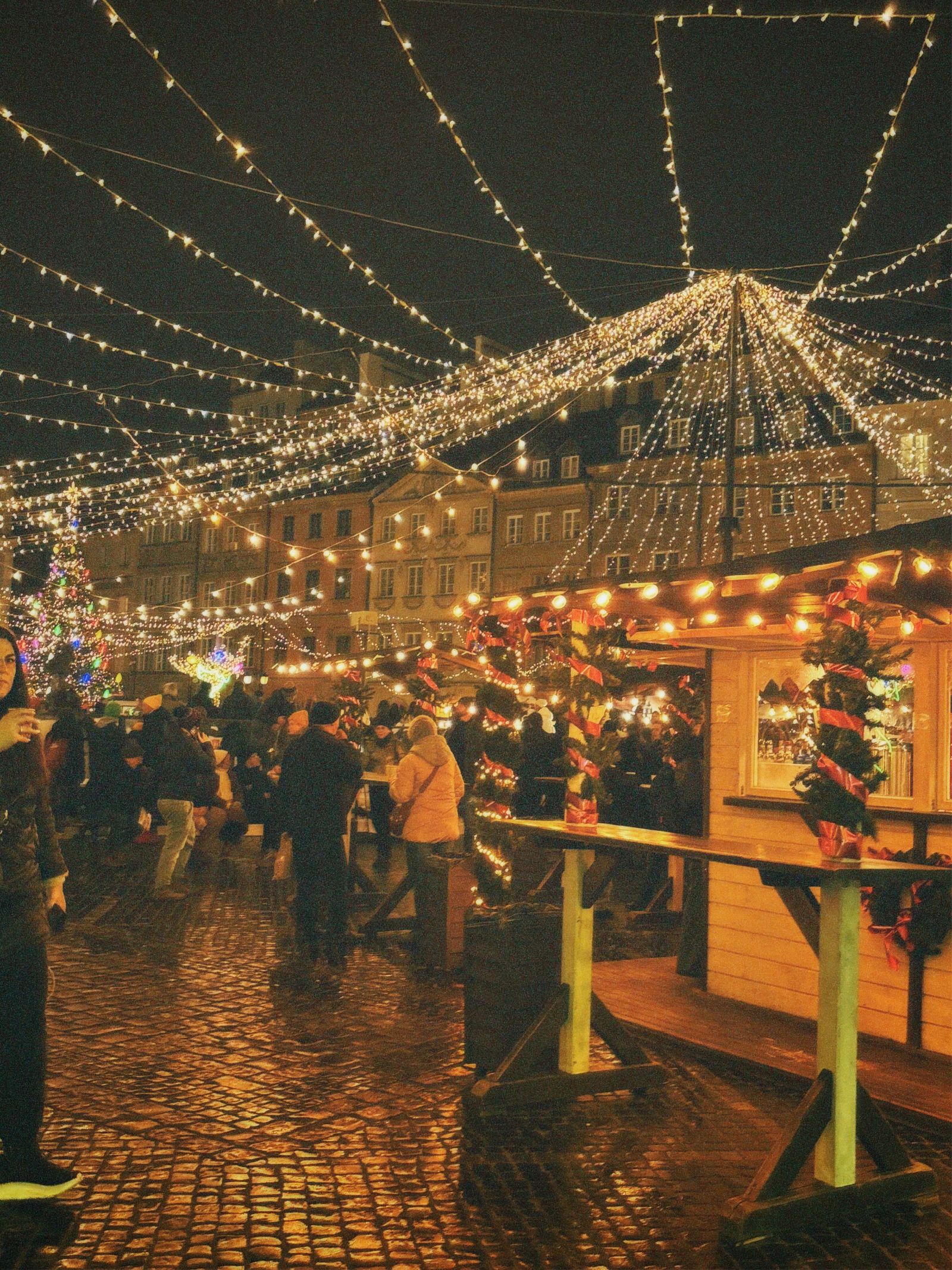
Wigilia is the Polish Christmas Eve supper on 24 December, together with the customs that surround it. It is widely observed, but it is not a single fixed ritual: what is served, how many dishes appear, which traditions are kept and how religious the evening feels vary by household, region, faith, generation and dietary practice. For visitors, the most useful thing to understand is the pattern and the variation, rather than a checklist.
Customs often associated with the evening
Several customs are strongly associated with Wigilia, and many families keep some of them rather than all. In many households the meal begins when the first star is seen in the evening sky, a practice connected with the Christmas story; in others the timing is simply practical. Many families share opłatek, a thin wafer broken and exchanged with good wishes before eating. An additional place is often set at the table, commonly explained as being for an unexpected guest or for an absent family member. Some households also keep older customs such as hay under the tablecloth. Culture.pl and the Polish government study portal both describe these practices as widespread traditions with regional and family variation rather than universal rules; see Culture.pl on the twelve dishes and study.gov.pl on Polish Christmas traditions.
Why twelve dishes
The number twelve is most often explained by a connection to the twelve apostles, and sometimes to the twelve months of the year. Both explanations circulate, and neither is a rule. Some families serve twelve dishes, some serve fewer and count generously, some count differently, and some do not count at all. Whether bread, dessert or kompot counts as a dish is itself a household question. Treat twelve as a familiar idea rather than a requirement.
Foods you might encounter
There is no prescribed national menu. The following are examples that appear frequently, not a list every table follows.
- Barszcz, a clear beetroot soup, often served with uszka, small filled dough parcels; some regions serve a mushroom soup instead.
- Mushroom dishes, particularly using dried forest mushrooms.
- Pierogi, commonly with cabbage and mushroom at this meal. Our guide to pierogi fillings covers the wider picture.
- Fish, with carp and herring both common in different preparations and different households.
- Kutia, a wheat, poppy seed and honey dish associated particularly with eastern traditions.
- Kompot made from dried fruit, often served warm.
- Sweet baking, including poppy seed and gingerbread items, which vary widely by region and family.
Traditional Wigilia tables are generally meatless, and that is often the first thing visitors are told. It is important to read that carefully: meatless in this context usually means no meat other than fish. Fish, dairy, eggs, butter and fish or vegetable stocks are commonly present, so a Wigilia table is not automatically vegetarian and rarely vegan. If you have dietary needs or allergies, ask about specific ingredients and preparation rather than relying on the meatless description.
What this means for travellers
Wigilia is, for most Polish people, a private family occasion at home. It is not a public event, and there is no general way for a visitor to be placed at a family table. Be cautious about any offer that presents a private family Christmas Eve supper as a purchasable experience, and treat private customs as private.
Practically, 24 to 26 December are unusual days. Opening hours for restaurants, shops, museums and attractions change, many close entirely for part of the period, and public transport and long-distance services frequently run to holiday timetables. Arrangements differ from year to year and from place to place, so we do not publish holiday opening times or schedules here. Check each venue, operator and transport provider directly, close to your travel dates, and confirm anything you are relying on such as an evening meal, an airport transfer or an intercity connection. Where a hotel or restaurant does serve a Christmas Eve meal, it will have its own booking arrangements, which you make with them.
Planning a winter visit
Late December brings short daylight hours and cold, changeable weather, which affects how much you can realistically fit into a day. Sightseeing plans usually work better with fewer stops and more indoor options. Our when to visit guide sets out how the seasons differ across Poland, and planning a trip to Poland covers the sequence of decisions. When you are ready to shape an itinerary, see plan a trip.
LinkedTri produces independent planning research. We do not operate tours, host meals or take bookings; travellers choose and book providers, transport and accommodation directly.
Common questions
What is Wigilia? It is the Polish Christmas Eve supper on 24 December and the customs around it. It is widely observed, but the details differ between households and regions.
Why are there twelve dishes? The number is commonly linked to the twelve apostles, and sometimes to the twelve months. Many families serve twelve, but counting and content vary and there is no fixed list.
Does Wigilia contain meat? Traditional tables are generally meatless, though fish is usually included, and dairy, eggs and stocks are common. It is not automatically vegetarian or vegan, so ask about ingredients.
What is the first-star tradition? In many households the meal begins when the first star appears in the evening sky. Other families simply start at a convenient time.
What foods might appear? Frequently seen examples include barszcz with uszka, mushroom dishes, cabbage-and-mushroom pierogi, fish such as carp or herring, kutia in some eastern traditions, dried-fruit kompot and regional sweet baking.
Can travellers attend a family Wigilia? Generally no. It is a private family occasion, and we do not arrange or endorse any such experience. Some hotels and restaurants offer their own Christmas Eve meals, which you would arrange with them directly.